





How to Find Your Car’s Paint Code
The paint code is clear factory information regarding the car’s color. It helps avoid confusion between shades and hues. Knowing the correct combination of numbers and letters is the key to the perfect color that matches the car’s factory paint. Each brand has its own specific paint color code, but the challenge is that vehicles do not store this information in one location. Most often, it is a sticker inside the vehicle, but its exact location depends on the car’s year of manufacture, model, and brand.
You may need the paint code to select paint, make local repairs, repaint parts, or remove chips.
What Is a Paint Code and Why Does It Matter
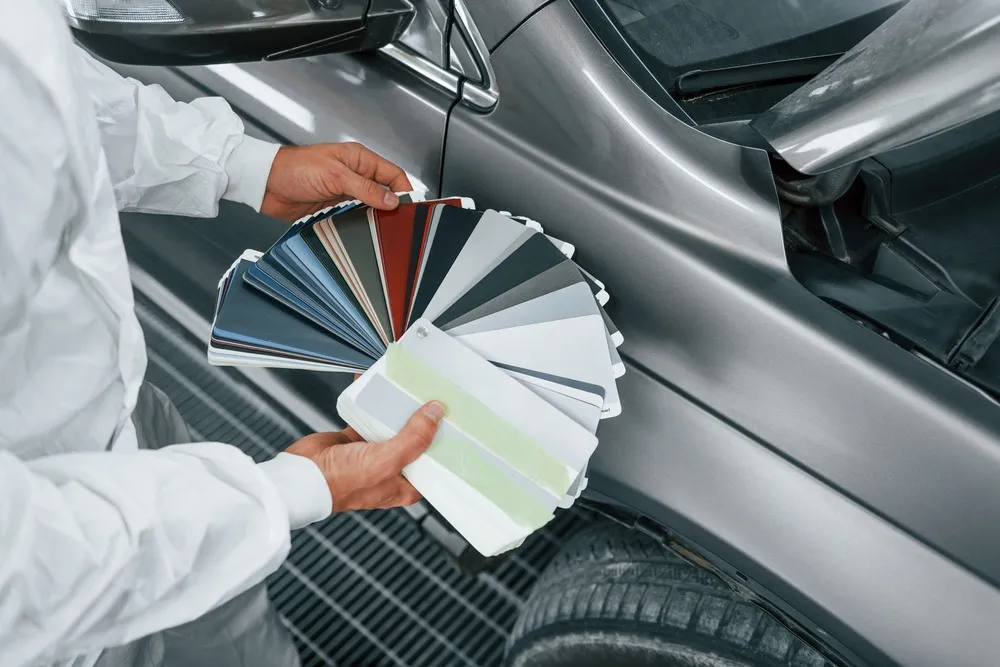
A paint code is a manufacturer-assigned identifier that represents the exact formulation of a vehicle’s exterior paint. It is not a color name but a unique code that enables the database to locate the exact paint formula for accurate mixing for spray application, touch-up work, or full refinishing. Each vehicle manufacturer uses its own coding system, and code locations vary by brand and model. The code may appear on a tag in the engine bay, on a door label, in the trunk, or in digital service records. But why do the same colors have different codes? Two cars can appear to be the same color yet use different paint codes. This happens because:
- Paint formulas may vary across production years.
- The same color name could be updated or reformulated.
- Different factories might use slightly different mixtures.
- Finishes can differ, including solid, metallic, pearl, tri-coat, or custom options.
For example, GM codes (General Motors vehicles: Chevrolet, GMC, Cadillac, or Buick) often change even when the visual color name remains unchanged. Without the correct code, the paint applied will not match exactly, especially in spot repairs.
A VIN identifies the vehicle, not the paint formula. While a VIN can be used to recover paint data from manufacturer systems, the VIN itself does not contain paint information. Don’t try to use identification numbers as paint codes (you’ll pick the wrong one).
- When the Paint Code Is Required: Using the correct paint code is essential when ordering exact-match auto paint, performing body repairs or panel replacements, applying spray paint to visible exterior panels, or executing spot repairs with limited blending. Without the proper code, even a professional application will result in a visible mismatch. This is especially critical for modern finishes and custom colors, where precision is non-negotiable.
Where to Look for a Paint Code on Your Car
Finding the car paint code requires checking several manufacturer-defined locations. Because labeling standards vary, placement is not universal. To find your paint code, inspect the following areas in order.
- Door Pillar or Door Jamb (Driver or Passenger Side): This is the most common location on modern vehicles, typically marked by a factory sticker on the B-pillar. It often displays details such as VIN, build date, axle, and trim information. Paint details are usually labeled as “Paint,” “Color,” or “C/TR.” This label is for easy identification and is the primary location for the color code.
- Under the Hood: Many manufacturers attach a metal or printed tag to the engine bay, radiator support, firewall, or strut tower. The paint code might be listed alongside engine and transmission details, but do not mistake it for component numbers or sensor references.
- Inside the Trunk or Spare Tire Area: This is common on European and some Japanese vehicles. Check under the trunk floor, inside the spare tire compartment, for a service sticker or printed tag. This area is protected from heat and wear, which helps preserve the automotive paint data over time.
- Service Booklet or Maintenance Documentation: This is useful when physical labels are missing or damaged. Some brands include paint information in printed or digital service records (e.g., Tesla), typically on the first pages of the service booklet or on a vehicle data sticker attached to the documentation.
- VIN Plate: The VIN plate typically does not display the paint code, but some manufacturers include it on the same tag. It is located in the engine bay or near the windshield (often riveted or stamped). Always verify whether the listed code refers to exterior paint rather than interior materials such as aniline leather or trim.
There is no button, sensor, or electronic menu that automatically displays the paint code. To find your color code, you must locate the original manufacturer tag or documentation. Don’t skip this step before ordering paint or performing any exterior repair work.
How to Find Paint Codes by Car Brand
If you need to cover up a scratch, for example, caused by a careless car wash, we will discuss below how to find a reliable code for a perfect paint match. Our lists cover a wide range of brands, from premium class to electric cars.
Whether you want to paint your car to refresh it or add a light touch to a faded surface, choosing the right color is very important.
Finding the Paint Code on Toyota Vehicles
Paint color code locations on Toyota vehicles are typically found on the driver-side door jamb. If you can’t find the code there, try looking for a VIN plate under the hood.
Typically, these codes consist only of three-digit numbers. Examples include: 040 (Super White) and 1G3 (Magnetic Gray). Toyota uses either numeric or alphanumeric identifiers. This code appears on the vehicle manufacturer label and is essential for ordering touch-up paint, a paint pen, or full auto paint.
How to Check the Paint Code on BMW Cars
BMW places the color code on your vehicle in several factory-defined locations, including under the hood (engine bay, strut tower area) and at the driver-side door pillar or door jamb.
The paint code format consists of 3 digits followed by a color name. For example: 300 Alpine White.
Where to Locate the Paint Code on Mercedes-Benz
Start with the engine bay (radiator support or firewall). Mercedes cars have been manufactured for a long time, and if you cannot find the color code in the owner’s manual, check the service booklet or maintenance record.
How to Find the Paint Code on Audi Models
When it comes to Audi, every vehicle has a sticky note on the spare wheel or trunk. This service sticker will contain a code in the format LY7W or LZ9Y.
Volkswagen Paint Code: Where to Look
Look for the service sticker in the trunk of Volkswagen cars, in LC9Z or LA7W format.
Identifying the Paint Code on Ford Vehicles
In Fords, things are a little different from those in other brands. The format is slightly different from the usual ones: UA, UH, Oxford White. Look for these codes on the door pillar or in the engine bay.

How to Find Hyundai Paint Codes
The Hyundai paint code is located either on the door pillar or under the hood—the format: AA, EB, YAC.
Where Is the Paint Code on Kia Cars
The Kia cars hide their paint code in the driver-side door jamb. It looks something like SWP or ABP.
Nissan Paint Code Location Explained
Take a look at the engine bay or firewall. The code will look like KH3 or QAB.
How to Locate the Paint Code on Lexus
Search the driver-side door pillar. The VIN plate is under the hood. Paint code format uses 3-digit numeric codes (e.g., 077, 212).
Finding the Paint Code on Porsche Vehicles
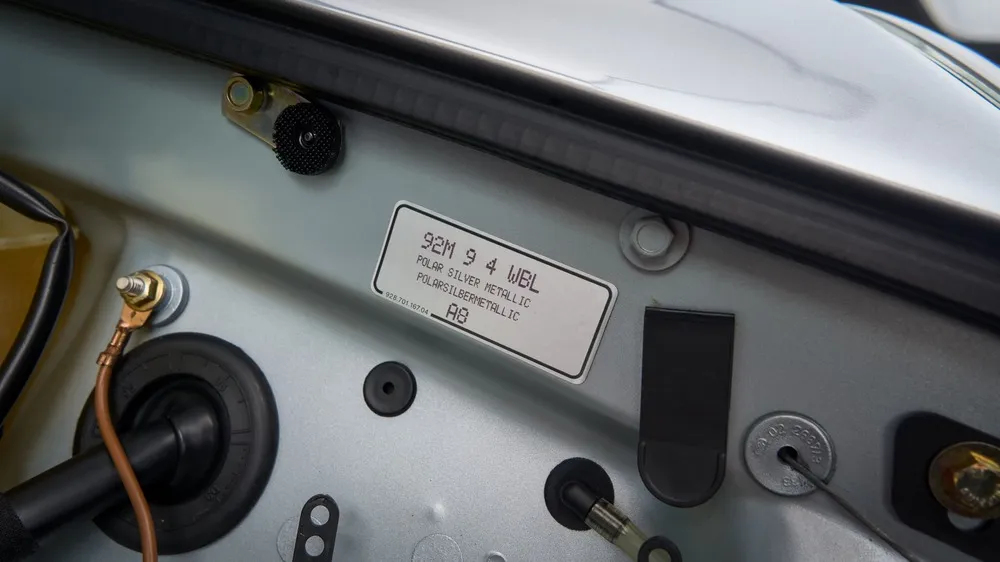
Look for the factory color code under the hood. You will find a service sticker. This is an original factory-applied sticker that Porsche places on the car. Dealers and service centers use it to accurately identify the car’s configuration. The sticker usually shows the VIN, paint code, option codes (PR/option codes), model, and year of manufacture. The format usually looks like C9A, LM9A.
How to Check the Paint Code on Tesla
Everything at Tesla is digital so that you won’t find any standard physical codes. Inside the car, everything is clean, with no identifying marks. The code for Tesla is available in your Tesla account. Go to the service menu. The format is easy to recognize because it differs from other brands (e.g., PPSB, PMNG).
How to Find a Paint Code Using VIN
You can’t directly read the paint code from the VIN. VIN stands for Vehicle Identification Number. You can use it to look up the code on your car’s paint sticker, check your owner’s manual/service history, use an online VIN decoder, or call your dealership, which can use the VIN to find your specific factory color code in its system.
Let’s figure out when a VIN will be helpful to you in searching for a code:
- The car is painted in its original factory paint
- The sticker on the hood, trunk, or door jamb is missing
- If the vehicle was imported, the local labels may differ
- You need an exact OEM color match for repainting or touch-up work (for example, if the car was damaged and you don’t want to use custom paint)
Manufacturers record paint details in their production databases, with the VIN serving as the primary key for accessing this data. This is especially important for modern vehicles, where color names alone may be inadequate because of the presence of many similar shades.
There are several ways to decode a VIN to recover paint information:
- Official dealer systems: The most accurate option, because dealers can access factory databases.
- Manufacturer-specific VIN tools: Many leading vehicle manufacturers (e.g., BMW, Mercedes-Benz, Toyota) provide VIN lookup tools on their official websites or dedicated portals.
- Third-party online decoders: This may be convenient. However, they are not always reliable.
Limitations of the Method: While VIN-based paint code research is practical, it has some limitations. Not all online decoders provide paint data. Repainted vehicles might not match their original factory colors. Additionally, older vehicles may lack complete digital records.
It’s also worth noting that some brands limit access to paint codes, restricting them to dealer networks.
Due to these limitations, VIN decoding should be considered a primary method, though not the only one. For accurate color matching, it is frequently used alongside physical label verification or spectrophotometer color scanning.
What to Do If You Can’t Find the Paint Code
If all of the options for finding the paint code suggested in the chapters above have failed, try one of the options below:
- Contact an Authorized Dealer: A certified dealer can often retrieve the paint code from the manufacturer’s internal databases. This method works best if the vehicle still has its factory paint and the VIN is intact. Dealers typically provide exact OEM paint codes, confirmation of factory color variations, and model-year–specific paint information. This option is very reliable, but be prepared to pay for the service or provide proof of ownership.
- Visit an Official Service Center: This method is better if the car has been partially repainted, if there are several similar factory colors, or if VIN data alone isn’t sufficient. Authorized service centers have access to the same technical databases as dealers, but may be more flexible in assisting with color identification. They can also visually inspect the vehicle to verify if the paint appears original.
- Use a Paint Scanner: A paint scanner (spectrophotometer) analyzes the vehicle’s actual color and generates a digital color profile. This method is widely used when the car has been repainted or when factory information is unavailable. Key advantages include matching the current paint rather than the factory record, accounting for fading, sun exposure, and wear. It is suitable for touch-ups and panel repairs. Accuracy relies on the scanner’s quality and the technician’s calibration process. Therefore, it is important to choose a high-quality service center for this type of assistance to avoid uneven paint.
- Consult a Professional Body Shop: Experienced body shops use a combination of different methods (such as VIN data, visual inspection, and paint scanning) to guarantee the best possible color match. This approach is often the most practical for older vehicles or those with previous bodywork repairs. Skilled technicians can manually adjust paint formulas, blend colors to prevent visible mismatches, and test samples before final application. This method is the most reliable for challenging cases, even when the original paint code cannot be recovered.
Common Mistakes When Searching for Paint Codes
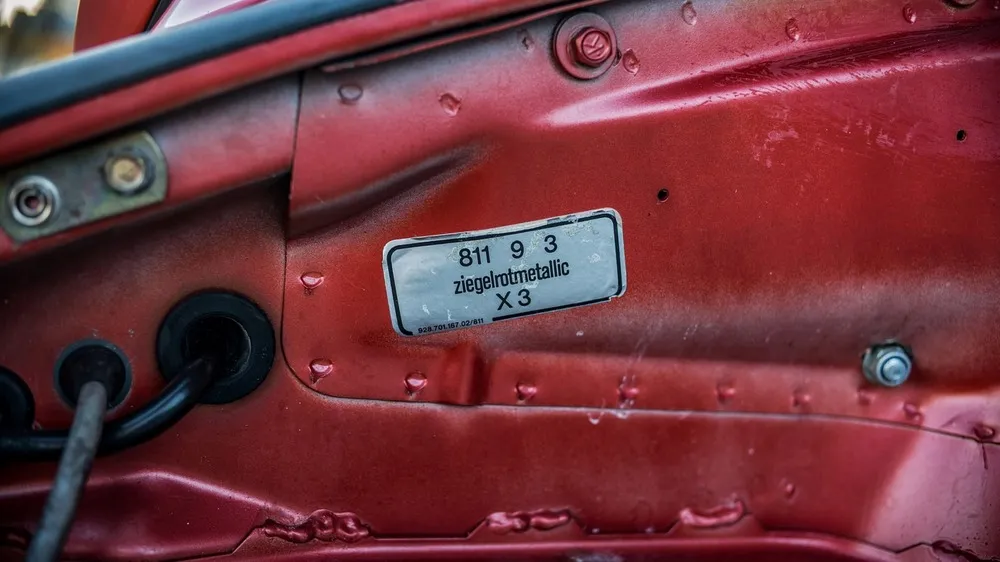
Common mistakes when trying to make a perfect match and locate paint codes include:
- Mistaking paint codes for other ID numbers, searching in the wrong physical locations, and using generic color names instead of the exact code. The paint code is typically a short, 2 to 5-character alphanumeric code, such as Toyota’s 1C8, BMW’s 475, Ford’s M7. It is often labeled as “Paint,” “Color Code,” “C/TR,” “Ext Pt,” or “CC.”
- Relying just on color names such as “Electric Blue” or “Acid Green”: This is wrong for precise matching, as multiple variants of the same color name may exist across different years or models. Always use the alphanumeric paint code.
- Ignoring tests: Always test a small, hidden area, like inside a door or trunk, before applying touch-up paint to the main surface. The paint may appear slightly different after drying and under different lighting conditions.
- Using unofficial or outdated paint charts: Online paint tables from unverified sources are often incomplete or inaccurate. They might combine codes from various years, markets, or manufacturers. Reliable sources include only manufacturer-approved databases or professional suppliers.
- Matching paint “by eye”: Choosing paint by visual comparison without technical testing is highly unreliable. Factors such as lighting, age, and reflections can significantly affect how color is seen. Colors that seem similar in a garage or showroom might look quite different in natural daylight. This method is dangerous when dealing with metallic, pearl, or glowing finishes.
Such mistakes can lead to selecting the wrong vehicle paint color. Even a minor error in identifying paint can cause noticeable color differences after repair. The most common errors listed below often lead to wasted time and extra costs.
In summary, we remind you to choose paint carefully and accurately, and to verify the paint code. This is important if you don’t want to be disappointed with the result, whether you’re making a major or minor repair. If you want to avoid risks and ensure a flawless finish, you can always turn to our car painting service. Desert Diamond specializes in professional paint correction, detailing, and surface restoration, helping your vehicle achieve a perfect color match and factory-level appearance.
FAQ
How and where can I find my car's paint code?
What should I do if I can't find my car's paint code?
Does the location of the paint code differ between different models and types of cars?
If I can't locate the paint code, is it acceptable to select the color visually?
Can I find the paint code using the VIN?